n8n AI automation limitations: Grenzen verstehen, Webhooks sauber konfigurieren & Execution Flows robust machen

Grenzen von n8n + Artificial Intelligence systematisch analysieren (und sofort entschärfen)
Wenn AI Automation in n8n scheitert, liegt es selten an „der KI“, sondern an harten Plattform- und Architekturgrenzen: Trigger-Design (Webhooks), Execution Flows, Datenvolumen, Concurrency, State-Handling, sowie Nicht-Determinismus von LLMs. Unten findest du die typischen Limitationen und wie du sie mit konkreten Patterns in n8n Nodes und Workflow Automation abfederst.
Interessiert an diesem Thema?
Kontaktieren Sie uns für eine kostenlose Beratung →1) Nicht-Determinismus & Output-Drift bei LLM-Schritten
- Limit: LLM-Antworten sind probabilistisch; selbst bei gleicher Eingabe kann das Format variieren.
- Impact: Downstream-n8n Nodes (Parser, IF, Mapping) brechen, wenn Felder fehlen oder anders heißen.
- Gegenmaßnahme: JSON-Schema erzwingen + Validierungsknoten + Fallback-Branch (z. B. „Repair JSON“ / erneute Anfrage).
2) Kontextfenster & Token-Budget
- Limit: LLMs haben Kontext-Limits; große Texte/Anhänge/Chat-Historien passen nicht hinein.
- Impact: Trunkierung führt zu Halluzinationen oder falschen Entscheidungen in Execution Flows.
- Gegenmaßnahme: Chunking + Summaries + Retrieval (RAG) außerhalb des Prompts; nur relevante Ausschnitte einspeisen.
3) Rate Limits, Timeouts & „Cold Starts“ externer AI-APIs
- Limit: Anbieter begrenzen Requests pro Minute/Tag; Requests können 429/5xx liefern.
- Impact: Workflow Automation stoppt oder erzeugt Dubletten durch Retries ohne Idempotenz.
- Gegenmaßnahme: Backoff/Retry mit Jitter + Idempotency Keys + Dead-Letter-Queue (DLQ) Muster.
4) Daten- & Security-Grenzen (PII, Secrets, Prompt Injection)
- Limit: Sensible Daten dürfen ggf. nicht an externe AI weitergegeben werden; Prompt Injection kann Tools missbrauchen.
- Impact: Compliance-Risiko und/oder ungewollte Tool-Aufrufe innerhalb von n8n Nodes.
- Gegenmaßnahme: Masking/Redaction, Allow-List für Tools, Content-Filter, signierte Webhooks, strikte RBAC.
Webhook Configuration: typische Limitierungen & robuste Konfiguration
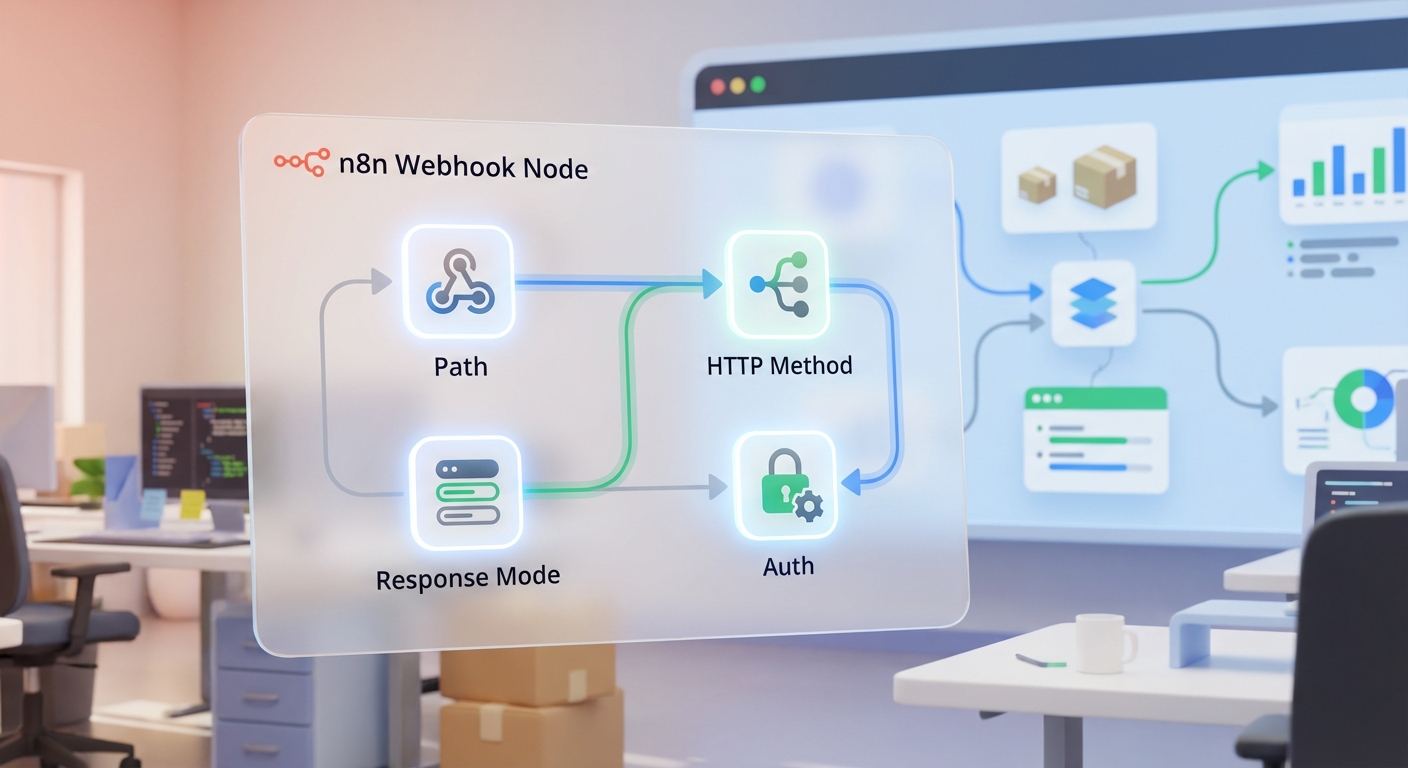
Webhooks sind der häufigste Einstiegspunkt für AI-Workflows. Die häufigsten Grenzen entstehen durch unzureichende Validierung, fehlende Signaturen und nicht-robuste Antworten. Ziel ist: früh validieren, idempotent verarbeiten und schnell antworten, damit Sender nicht erneut sendet.
Best Practices für Webhook Configuration
- Authentisierung: HMAC-Signatur (z. B.
X-Signature) oder mTLS/API-Key. - Idempotenz:
eventIdspeichern und Duplikate droppen. - Payload-Grenzen: Max Body Size definieren, große Daten in Storage auslagern (S3, DB) und nur Referenzen schicken.
- Schnelle ACK-Antwort: Bei langsamen AI-Aufrufen asynchronisieren (Webhook antwortet 200, Verarbeitung läuft weiter).
- Schema-Validierung: Eingaben direkt im ersten Function/Code-Node prüfen.
Execution Flows: wo n8n + AI typischerweise an Grenzen stößt
„Execution Flows“ meint die Art, wie n8n Workflows ausgeführt werden: Trigger → n8n Nodes → Branching → Retries → Persistenz/State → Abschluss. Mit AI kommen zusätzliche Failure-Modes rein (Formatdrift, Latenz, Rate Limits). Entscheidend ist, den Flow als fehlertoleranten Prozess zu designen.
Limitierungsmuster in Execution Flows
- Lange Laufzeiten: AI-Calls + nachgelagerte API-Calls können Execution Times sprengen.
- Parallelität/Concurrency: Viele Webhook-Events → gleichzeitige Ausführungen → API-Limits, DB-Locks, Kostenexplosion.
- Fehlerkaskaden: Ein Node liefert invalides JSON → Mapping bricht → gesamte Ausführung fehlschlägt.
- State-Verlust: Ohne Persistenz (DB/Queue) sind Retries schwer, Dubletten wahrscheinlich.
Robuste Execution-Flow-Patterns
- Asynchronisierung: Webhook → Queue/DB → Worker-Workflow (separat) für AI & Side-Effects.
- Guardrails: „Validate → Normalize → Execute“ als feste Node-Abfolge.
- Circuit Breaker: Bei wiederholten 429/5xx die AI-Strecke pausieren und DLQ befüllen.
- Idempotente Side-Effects: Upserts statt Inserts; externe Calls mit idempotency key.
| Feature | Details |
|---|---|
| Webhook Validation | Schema-Checks, Signature Verification, Größenlimits, schnelle ACK-Response |
| Execution Flow Resilience | Retries mit Backoff, DLQ, Idempotenz, separate Worker-Workflows |
| AI Output Control | JSON-Schema, Output-Validation, Repair-Loop, deterministic post-processing |
| Scaling Limits | Concurrency kontrollieren, Rate-Limits beachten, Kosten/Token-Budget monitoren |
Beispiel-Architektur: Webhook → Validierung → AI → Normalisierung → Side-Effects
flowchart LR
  A[Webhook Trigger] --> B[Validate Signature + Schema]
  B -->|ok| C[Idempotency Check]
  B -->|fail| X[Reject 401/400]
  C -->|duplicate| D[Return 200 Already Processed]
  C -->|new| E[Enqueue Job / Persist Request]
  E --> F[Worker Workflow Execution]
  F --> G[AI Node / LLM Call]
  G --> H[Normalize + Validate JSON Output]
  H -->|valid| I[Business Nodes: CRM/Ticket/DB]
  H -->|invalid| J[Repair Loop / Fallback]
  I --> K[Audit Log + Metrics]
  J --> K
JSON Config for Workflow: Webhook + Execution Flow Guardrails (Beispiel)
Die folgende Konfiguration zeigt ein vereinfachtes Muster: Webhook empfängt Events, validiert grundlegende Felder, prüft Idempotenz (hier nur als Platzhalter-Logic), ruft AI auf und validiert das Ergebnis, bevor Side-Effects ausgeführt werden. In der Praxis würdest du Idempotenz gegen DB/Redis prüfen und DLQ/Queue ergänzen.
**JSON Config for Workflow**{
"name": "AI Automation - Webhook to AI with Guardrails",
"nodes": [
{
"parameters": {
"path": "ai-automation/events",
"httpMethod": "POST",
"responseMode": "onReceived",
"options": {
"responseHeaders": {
"entries": [
{
"name": "Content-Type",
"value": "application/json"
}
]
}
}
},
"name": "Webhook",
"type": "n8n-nodes-base.webhook",
"typeVersion": 2,
"position": [
260,
260
]
},
{
"parameters": {
"jsCode": "const body = $json.body ?? $json;\n\n// Minimal schema validation (extend as needed)\nconst required = ['eventId', 'customerId', 'message'];\nconst missing = required.filter((k) => body[k] === undefined || body[k] === null || body[k] === '');\n\nif (missing.length) {\n return [{\n json: {\n ok: false,\n error: 'Missing required fields',\n missing\n }\n }];\n}\n\n// Normalize\nreturn [{\n json: {\n ok: true,\n eventId: String(body.eventId),\n customerId: String(body.customerId),\n message: String(body.message)\n }\n}];"
},
"name": "Validate Input",
"type": "n8n-nodes-base.code",
"typeVersion": 2,
"position": [
520,
260
]
},
{
"parameters": {
"conditions": {
"boolean": [
{
"value1": "={{ $json.ok }}",
"value2": true
}
]
}
},
"name": "IF Valid",
"type": "n8n-nodes-base.if",
"typeVersion": 2,
"position": [
760,
260
]
},
{
"parameters": {
"respondWith": "json",
"responseBody": "={\n ok: false,\n error: $json.error,\n missing: $json.missing\n}",
"options": {
"responseCode": 400
}
},
"name": "Reject 400",
"type": "n8n-nodes-base.respondToWebhook",
"typeVersion": 1,
"position": [
1020,
420
]
},
{
"parameters": {
"jsCode": "// Placeholder idempotency check\n// Replace with DB/Redis lookup using eventId\nconst alreadyProcessed = false;\n\nreturn [{\n json: {\n ...$json,\n alreadyProcessed\n }\n}];"
},
"name": "Idempotency Check",
"type": "n8n-nodes-base.code",
"typeVersion": 2,
"position": [
1020,
220
]
},
{
"parameters": {
"conditions": {
"boolean": [
{
"value1": "={{ $json.alreadyProcessed }}",
"value2": true
}
]
}
},
"name": "IF Duplicate",
"type": "n8n-nodes-base.if",
"typeVersion": 2,
"position": [
1260,
220
]
},
{
"parameters": {
"respondWith": "json",
"responseBody": "={\n ok: true,\n status: 'duplicate_ignored',\n eventId: $json.eventId\n}",
"options": {
"responseCode": 200
}
},
"name": "ACK Duplicate",
"type": "n8n-nodes-base.respondToWebhook",
"typeVersion": 1,
"position": [
1500,
120
]
},
{
"parameters": {
"respondWith": "json",
"responseBody": "={\n ok: true,\n status: 'accepted',\n eventId: $json.eventId\n}",
"options": {
"responseCode": 202
}
},
"name": "ACK Accepted",
"type": "n8n-nodes-base.respondToWebhook",
"typeVersion": 1,
"position": [
1500,
320
]
},
{
"parameters": {
"jsCode": "// Simulate an AI call result shape you want to enforce\n// In reality: call your LLM node first, then validate here\n\nconst aiOutput = {\n action: 'create_ticket',\n priority: 'high',\n summary: $json.message.slice(0, 120)\n};\n\n// Validate output\nconst allowedActions = ['create_ticket', 'update_crm', 'route_to_human'];\nif (!allowedActions.includes(aiOutput.action)) {\n return [{\n json: {\n ok: false,\n error: 'Invalid AI action',\n aiOutput\n }\n }];\n}\n\nreturn [{\n json: {\n ok: true,\n eventId: $json.eventId,\n customerId: $json.customerId,\n ai: aiOutput\n }\n}];"
},
"name": "AI Output Guardrail",
"type": "n8n-nodes-base.code",
"typeVersion": 2,
"position": [
1740,
320
]
}
],
"connections": {
"Webhook": {
"main": [
[
{
"node": "Validate Input",
"type": "main",
"index": 0
}
]
]
},
"Validate Input": {
"main": [
[
{
"node": "IF Valid",
"type": "main",
"index": 0
}
]
]
},
"IF Valid": {
"main": [
[
{
"node": "Idempotency Check",
"type": "main",
"index": 0
}
],
[
{
"node": "Reject 400",
"type": "main",
"index": 0
}
]
]
},
"Idempotency Check": {
"main": [
[
{
"node": "IF Duplicate",
"type": "main",
"index": 0
}
]
]
},
"IF Duplicate": {
"main": [
[
{
"node": "ACK Duplicate",
"type": "main",
"index": 0
}
],
[
{
"node": "ACK Accepted",
"type": "main",
"index": 0
},
{
"node": "AI Output Guardrail",
"type": "main",
"index": 0
}
]
]
}
},
"active": false,
"settings": {
"executionTimeout": 300,
"saveExecutionProgress": true
},
"versionId": "1"
}
TypeScript Node Script: Signatur prüfen + idempotent entscheiden (für Code Node)
Dieses TypeScript-Snippet ist für einen n8n Code Node gedacht (oder als Grundlage für ein Custom Node). Es prüft eine HMAC-Signatur, normalisiert das Payload und erzeugt eine deterministische Idempotency-Key-Strategie. Damit reduzierst du die typischen Webhook- und Execution-Flow-Probleme bei AI-getriebenen Automationen.
**TypeScript Node Script**import crypto from 'crypto';
type WebhookPayload = {
eventId: string;
customerId: string;
message: string;
timestamp?: string;
};
type Normalized = {
eventId: string;
customerId: string;
message: string;
idempotencyKey: string;
};
function timingSafeEqual(a: string, b: string): boolean {
const aBuf = Buffer.from(a);
const bBuf = Buffer.from(b);
if (aBuf.length !== bBuf.length) return false;
return crypto.timingSafeEqual(aBuf, bBuf);
}
function computeSignature(secret: string, rawBody: string): string {
return crypto
.createHmac('sha256', secret)
.update(rawBody, 'utf8')
.digest('hex');
}
function normalizePayload(payload: WebhookPayload): Normalized {
const eventId = String(payload.eventId);
const customerId = String(payload.customerId);
const message = String(payload.message);
// Deterministic idempotency key (event-based). You can also include a stable hash of message.
const idempotencyKey = crypto
.createHash('sha256')
.update(`${eventId}:${customerId}`)
.digest('hex');
return {
eventId,
customerId,
message,
idempotencyKey,
};
}
// n8n Code Node entry (conceptual):
// const secret = $env.WEBHOOK_SECRET;
// const signatureHeader = $json.headers?.['x-signature'] ?? '';
// const rawBody = $json.rawBody ?? JSON.stringify($json.body ?? $json);
// const payload = ($json.body ?? $json) as WebhookPayload;
export function validateAndNormalize(
secret: string,
signatureHeader: string,
rawBody: string,
payload: WebhookPayload
): { ok: true; data: Normalized } | { ok: false; error: string } {
if (!payload?.eventId || !payload?.customerId || !payload?.message) {
return { ok: false, error: 'Missing required fields: eventId, customerId, message' };
}
const expected = computeSignature(secret, rawBody);
const provided = String(signatureHeader).trim();
if (!provided) {
return { ok: false, error: 'Missing X-Signature header' };
}
if (!timingSafeEqual(expected, provided)) {
return { ok: false, error: 'Invalid signature' };
}
return { ok: true, data: normalizePayload(payload) };
}
Konkrete Limit-Checkliste für AI Automation in n8n
- Webhook Configuration: Signaturprüfung, Schema-Validation, Payload-Limits, 202-ACK bei asynchroner Verarbeitung.
- Execution Flows: Retries (Backoff), DLQ, Idempotenz für Side-Effects, Concurrency-Kontrolle.
- AI Guardrails: JSON-Schema erzwingen, Output validieren, Repair-Loop, tool allow-listing.
- Observability: Logging + Correlation IDs (eventId), Metriken (429/5xx), Token/Kosten-Tracking.